Semax is a synthetic heptapeptide, Met-Glu-His-Phe-Pro-Gly-Pro: the ACTH(4-7) fragment joined to a Pro-Gly-Pro tail that increases resistance to peptidases.
It is described both as an "analogue of ACTH(4-10)" and as "ACTH(4-7)PGP"; both names refer to the same molecule.
PubChem lists Semax under CAS 80714-61-0 and CID 9811102, with formula C37H51N9O10S and molar mass 813.9 g/mol.
Its N-terminal methionine is prone to oxidation, and Semax is not named in Australia's June 2026 Poisons Standard.
Semax is a synthetic seven-amino-acid peptide, Met-Glu-His-Phe-Pro-Gly-Pro, made by joining a fragment of adrenocorticotropic hormone, ACTH(4-7), to a Pro-Gly-Pro tail.1 It originated in Russia, and most published work on it comes from Russian Academy of Sciences institutes in Moscow. It is not named in Australia's Poisons Standard.2
This profile describes the compound as a laboratory chemical: identity, structure, analytical checks, handling and regulation. Titan Peptides supplies it for laboratory and research use only; it is not for human consumption.
What is Semax?
Semax is a heptapeptide: seven amino acids joined by peptide bonds. Its first four residues (Met-Glu-His-Phe) are positions 4 to 7 of ACTH, a pituitary hormone. The last three (Pro-Gly-Pro) are a so-called glyproline tail, added to increase resistance to peptidases, the enzymes that cut peptides apart.
You will see Semax described in two ways that mean the same molecule. Some papers call it an "analogue of ACTH(4-10)", because the natural fragment ACTH(4-10) reads Met-Glu-His-Phe-Arg-Trp-Gly and Semax replaces the last three residues. Others call it "ACTH(4-7)PGP", which describes how it is actually built.
Semax at a glance
Chemical identifiers below are as listed by PubChem.1
Property
Semax
Class
Synthetic heptapeptide; ACTH(4-7) analogue with a C-terminal Pro-Gly-Pro
Sequence (one-letter)
MEHFPGP
Sequence (three-letter)
Met-Glu-His-Phe-Pro-Gly-Pro
Molecular formula
C37H51N9O10S
Molar mass
813.9 g/mol
CAS number
80714-61-0
PubChem CID
9811102
Origin
Developed in Russia; most studies come from Russian Academy of Sciences institutes in Moscow
The glyproline tail
Pro-Gly-Pro is the same tail found on Selank, a sister compound from the same research network, but the two peptides are built on unrelated parent molecules: Semax on a hormone fragment and Selank on tuftsin, a fragment of immunoglobulin G. See our Selank compound profile for the comparison of their sequences.
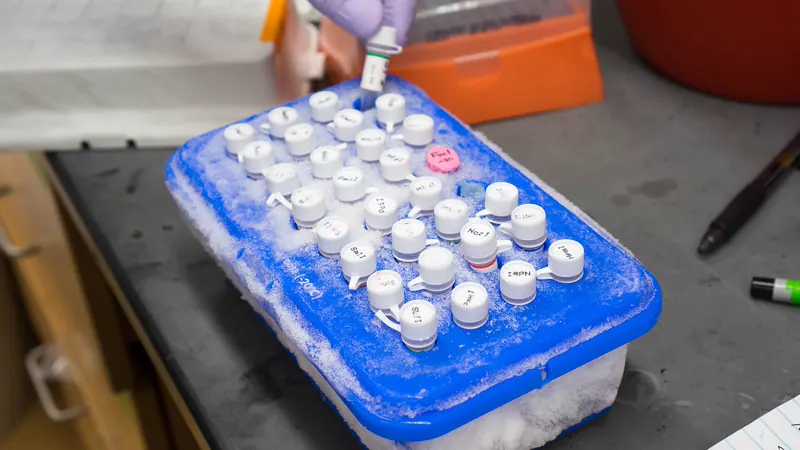
The methionine in Semax carries a sulphur-containing side chain that oxidises easily, so limit its exposure to oxygen, moisture and light. Keep the sealed vial dry, dark and at −20 °C or colder. Bring it to room temperature in a desiccator before opening, because a cold peptide powder draws water from the air, and close it again quickly; supplier guidance suggests displacing the air with nitrogen or argon for methionine-containing sequences. Oxidation of the methionine adds about 16 Da, which mass spectrometry detects; see how HPLC and mass spectrometry test peptide identity and purity and storing lyophilised and reconstituted peptides.
Semax in Australia
Semax is not named in the June 2026 Poisons Standard (SUSMP No. 48).2 How an unscheduled substance is regulated depends on how it is supplied and presented, because the Therapeutic Goods Act 1989 treats goods presented as, or likely to be taken as, being for therapeutic use as therapeutic goods. Our guide are research peptides legal in Australia? covers that in detail. Semax is not an approved therapeutic good in Australia.
Frequently asked questions
What is Semax peptide?
Semax is a synthetic heptapeptide with the sequence Met-Glu-His-Phe-Pro-Gly-Pro. It combines positions 4 to 7 of the hormone ACTH with a Pro-Gly-Pro tail that increases resistance to peptidases. It originated in Russia, and most published work on it comes from Russian Academy of Sciences institutes.
Why is Semax called both an ACTH(4-10) analogue and ACTH(4-7)PGP?
Both names describe the same molecule. The natural fragment ACTH(4-10) reads Met-Glu-His-Phe-Arg-Trp-Gly, and Semax replaces its last three residues with Pro-Gly-Pro, so some papers call it an ACTH(4-10) analogue. ACTH(4-7)PGP describes how it is actually built.
What is Semax's CAS number?
PubChem lists Semax under CAS number 80714-61-0 and CID 9811102. Its molecular formula is C37H51N9O10S and its molar mass 813.9 g/mol, and the one-letter sequence is MEHFPGP.
Is Semax legal in Australia?
Semax is not named in the June 2026 Poisons Standard. Under the Therapeutic Goods Act 1989, goods presented or likely to be taken as being for therapeutic use are therapeutic goods, whatever the label says. Research-grade Semax is not an approved therapeutic good and is supplied for laboratory research only.
References
National Center for Biotechnology Information. PubChem Compound Summary for CID 9811102, Semax. Accessed 21 September 2026. Source
Therapeutic Goods (Poisons Standard—June 2026) Instrument 2026 (SUSMP No. 48), F2026L00633, commenced 1 June 2026. Federal Register of Legislation. Source
Research use only. This article summarises published scientific literature
for educational purposes. It is not medical advice and does not describe or endorse human
or veterinary use. Compounds supplied by Titan Peptides are for laboratory research only
and are not approved therapeutic goods in Australia.
A chemical profile of Selank (Thr-Lys-Pro-Arg-Pro-Gly-Pro): its tuftsin core and glyproline tail, where it was developed, its identifiers and salt forms, solvent choice and Australian status.
A laboratory guide to storing lyophilised and reconstituted peptides: freezer temperatures, moisture, oxidation-prone residues, light, freeze–thaw cycles and adsorption to containers.
A plain-English primer on research peptides: what a peptide is, how peptides are built one amino acid at a time on a resin bead, why they arrive as a freeze-dried powder, and what "research use only" does and does not mean.